Choosing a reusable bottle becomes harder when every material is presented as either a solution or a threat. A more useful approach starts with the job: where will you use it, how will you clean it, and what parts will touch the drink?
Microplastic research adds questions to that decision. It does not reduce it to a universal ranking of three materials.
What the research can—and cannot—settle
Microplastics and nanoplastics have been detected in water and food, but comparing studies is difficult because methods and particle-size ranges differ. A count from one study cannot automatically be compared with a count from another. The FDA explains these measurement limits and the remaining health-evidence gaps.
For a buyer, that means treating a claim such as “microplastic-free” as something that needs a defined test, a detection limit, and a clear description of what was tested. A material name alone cannot establish the claim.
Compare the complete object
| Material | Useful qualities | What to check |
|---|---|---|
| Glass | Transparent walls make contents and cleaning easy to inspect. | Breakage risk, weight, intended beverage temperatures, and the materials in the lid and accessories. |
| Stainless steel | A durable body; double-wall vacuum construction can provide insulation. | Whether the specific bottle is insulated, its internal construction, lid components, and care instructions. |
| Plastic | Often light and practical where weight or breakage matters. | Whether it is intended for repeated use, permitted temperatures, wear, and replacement guidance. |
This is a use-and-care comparison, not a health ranking. Glass can break. Steel can be damaged. Plastic formulations and designs differ. A bottle that suits your actual routine is easier to keep in service.
Look beyond the body
Before choosing, inspect the parts that are easy to overlook: cap underside, seal, drinking spout, straw, and any internal coating. Ask the manufacturer which materials contact the drink and how the pieces should be cleaned or replaced.
A metal exterior does not prove that every component is metal. A glass body does not prove that the cap is glass. Judge the assembly, including the parts that experience repeated opening and cleaning.
Four practical steps
- Use each product within its stated conditions. Check the instructions before adding hot liquid, microwaving, freezing, or using a dishwasher. For reheating food, choose a container specifically intended for that task; suitability depends on the product, not just the material category.
- Make cleaning realistic. Look for access to the interior and removable components where appropriate. Follow the maker’s instructions, and replace damaged parts rather than improvising a repair to a drinking surface.
- Match filtration to a verified claim. If microplastic reduction is a goal, check the exact filter model’s certification listing for that reduction claim. NSF/ANSI 401 includes microplastic-reduction claims; a general certification mark or a taste-and-odor claim is not enough. NSF explains how to verify filter certification.
- Keep the claim proportionate. Buying a different bottle or filter does not establish zero exposure. Treat these choices as practical preferences, with the limits of the evidence kept visible.
How we approach the choice
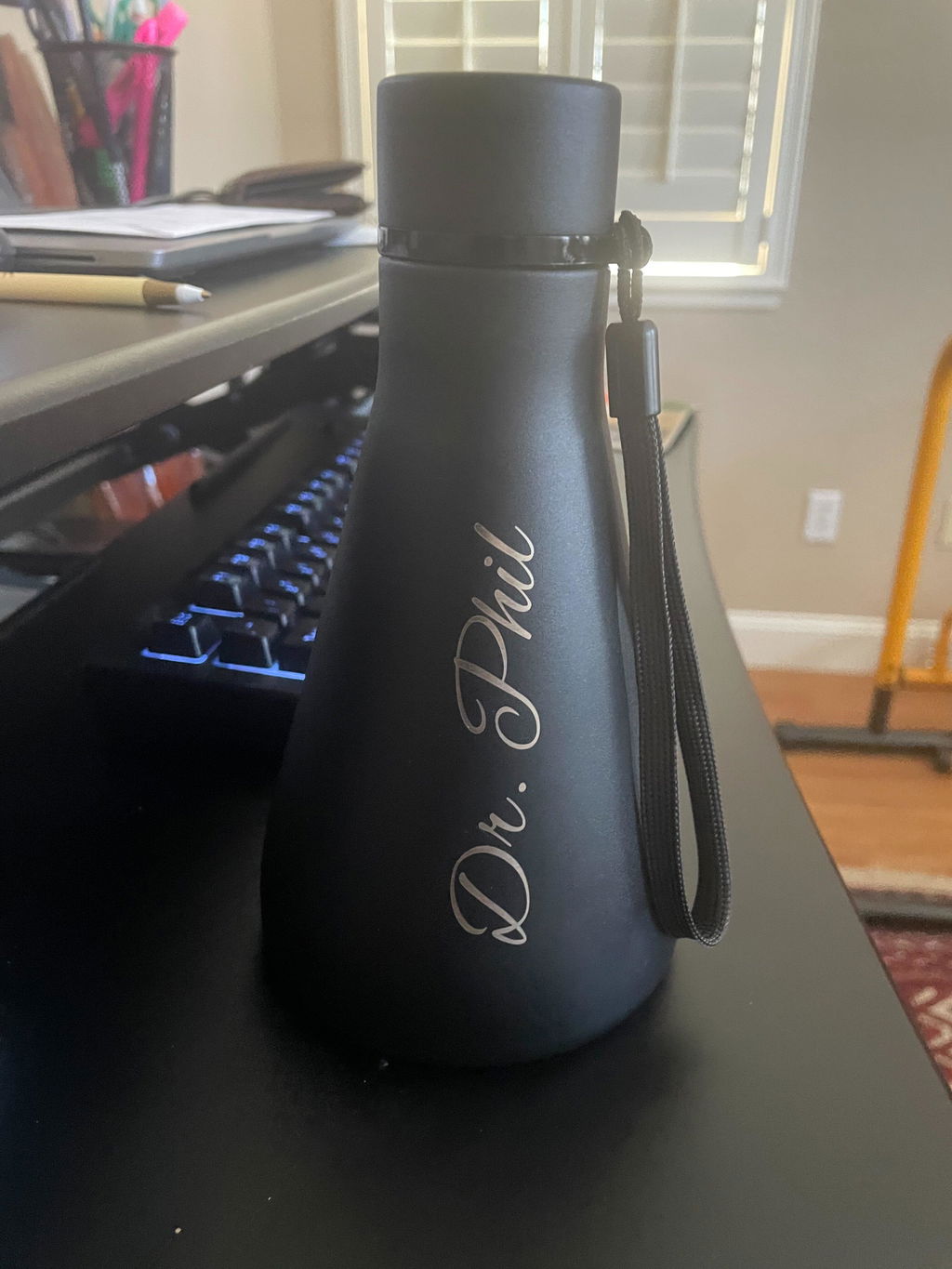
The Flask Vessel pairs a 304 stainless steel body with double-wall vacuum insulation and a laboratory-inspired silhouette. It has approximately 440 mL usable capacity. We recommend hand washing and do not recommend microwaving or freezing it. Review the full Flask Vessel specifications to decide whether it suits your use.
If you prefer to see the drink, glass has an obvious advantage. If you want an insulated body for daily carrying, an appropriately designed steel bottle may suit you better. Neither preference needs to be dressed up as a medical claim.
For a broader comparison of everyday use, read our existing glass versus stainless steel guide. The better purchase is the object whose construction you understand and whose care requirements you can meet.